Website & Landing Page Design
Digital Marketing Fundamentals samajhne ke baad, agla step hai apna "home base" banana — website. Is module mein hum domain/hosting ki basics se lekar WordPress, website structure, high-converting landing pages, lead capture forms, aur mobile/speed optimization tak — sab kuch step-by-step seekhenge, taaki agle modules (SEO, Ads) ka poora fayda mil sake.
2.1 Website Ka Role in Digital Marketing
1. Definition (Paribhasha)
Website aapke digital presence ka "home base" hai — jahan par sab digital marketing efforts (SEO, Ads, Social Media) traffic bhej kar aata hai, aur jahan asal mein visitor customer ya lead mein convert hota hai.
2. Real-World Use
- Claratrade India ke saare Google Ads, Meta Ads aur Instagram posts, sab log ultimately website ke kisi na kisi page (Contact form, Services page) par le jaate hain, jahan actual inquiry hoti hai.
3. Kaise Kaam Karta Hai
- Social media platforms "rented land" ki tarah hote hain — algorithm change ya account suspend hone par reach chali jaati hai. Website "owned property" hai jispar aapka full control hota hai.
- Website ek trust-building tool hai — koi bhi serious customer purchase se pehle website check karta hai.
- Website hi wo jagah hai jahan SEO (organic) aur Ads (paid) dono ka traffic milta hai aur convert hota hai.
4. Kaise Implement Karein (Step-by-Step)
- 1Decide karein website ka main goal kya hai — leads lena, sales karna, ya sirf information dena.
- 2Website ko is tarah design karein ki wo goal achieve karne mein directly help kare (jaise clear Contact button).
- 3Social media bios aur ads mein hamesha website link add karein.
- 4Website ko regularly update karte rahein — naya content, naye testimonials.
5. WordPress / HTML Site Example
WordPress: Beginners aur non-technical business owners ke liye easy hai — bina coding ke content update kar sakte hain. HTML Site: Developers ke liye zyada control deta hai lekin har chhota change karne ke liye coding knowledge chahiye hoti hai.
6. Common Mistakes
- Sirf social media par depend rehna aur website bilkul na banana — "owned" presence na hona.
- Website banake usse kabhi update na karna — purani information, purane offers rakh dena.
7. Tools (Manual + AI)
- Manual: WordPress, Wix, Google Sites (beginners ke liye)
- AI Tools: ChatGPT/Claude se website ka structure aur content outline banwana
8. Interview Questions
- Website ko "owned media" kyun kaha jaata hai?
- Sirf social media hone se website ka kya extra fayda hai?
9. Client Example (Alag-Alag Industries)
10. Practical Assignment
2.2 Domain & Hosting Basics
1. Definition (Paribhasha)
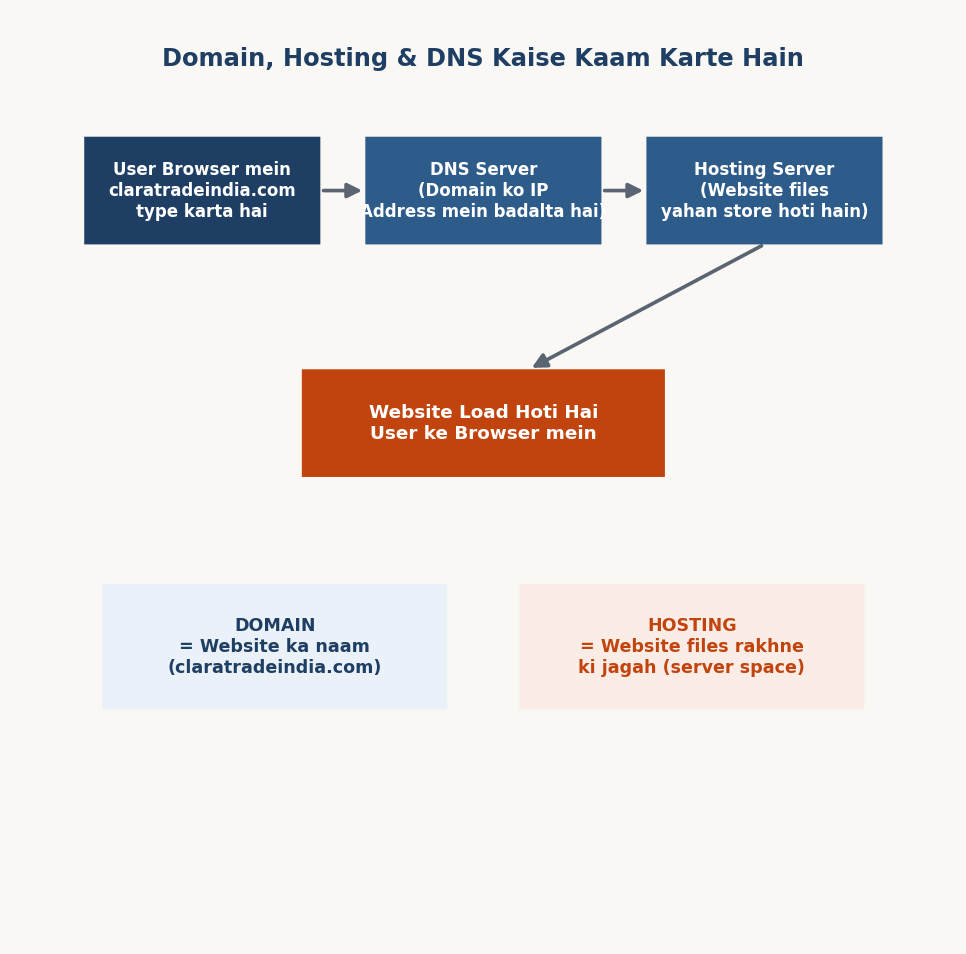
Domain aapki website ka naam hai (jaise claratradeindia.com) jise log browser mein type karte hain. Hosting wo server space hai jahan aapki website ki actual files (design, content, images) store hoti hain. DNS in dono ko connect karta hai.
2. Real-World Use
- Claratrade India ne apna domain "claratradeindia.com" register karaya aur usse ek hosting provider ke saath connect kiya taaki website live ho sake.
3. Kaise Kaam Karta Hai
- Jab user browser mein domain type karta hai, DNS server us domain ko hosting server ke IP address mein translate karta hai.
- Hosting server phir website ki files (HTML, CSS, images) user ke browser ko bhejta hai, jisse website load hoti hai.
- Domain aur Hosting alag-alag companies se bhi liye ja sakte hain, ya ek hi jagah se dono bundle mein.
4. Kaise Implement Karein (Step-by-Step)
- 1Ek relevant, yaad rakhne layak domain naam choose karein (business ke naam se match karta ho).
- 2Registrar (jaise GoDaddy, Hostinger, BigRock) se domain register karein.
- 3Ek reliable hosting provider choose karein (business size ke hisaab se shared/VPS hosting).
- 4Domain ke DNS settings mein hosting server ka nameserver/IP add karein.
- 5SSL Certificate (HTTPS) activate karein — ye security aur SEO dono ke liye zaroori hai.
5. WordPress / HTML Site Example
WordPress: Zyadatar hosting providers "1-click WordPress install" dete hain. HTML Site: Files ko FTP/File Manager se manually hosting server par upload karna padta hai.
6. Common Mistakes
- Domain expiry date bhool jaana — renewal miss hone se website down ho sakti hai ya domain kisi aur ko mil sakta hai.
- Bahut sasta, unreliable hosting choose karna jisse website slow ya down rehti hai.
7. Tools (Manual + AI)
- Manual: GoDaddy, Hostinger, BigRock, Namecheap (domain/hosting providers)
- Manual: Cloudflare (DNS management aur security ke liye)
- AI Tools: ChatGPT se hosting plan comparison samajhna
8. Interview Questions
- Domain aur Hosting mein kya farak hai?
- DNS ka role kya hota hai website load hone mein?
9. Client Example (Alag-Alag Industries)
10. Practical Assignment
2.3 WordPress Fundamentals
1. Definition (Paribhasha)
WordPress ek Content Management System (CMS) hai jisse bina heavy coding knowledge ke website bana aur manage kar sakte hain. Ye duniya ki sabse popular website-building platform hai.
2. Real-World Use
- Claratrade India apne clients ke liye zyadatar websites WordPress par banata hai kyunki client khud future mein content update kar sakta hai, bina developer ko baar-baar call kiye.
3. Kaise Kaam Karta Hai
- WordPress mein "Themes" website ka look/design decide karte hain, aur "Plugins" extra features add karte hain (jaise contact forms, SEO tools).
- Dashboard se hi Pages, Posts (blog), Media (images) sab manage kiya ja sakta hai — drag-drop builders (jaise Elementor) se visually design bhi kar sakte hain.
- WooCommerce jaisa plugin WordPress ko full e-commerce store mein convert kar sakta hai.
4. Kaise Implement Karein (Step-by-Step)
- 1Hosting par WordPress install karein (zyadatar hosting providers ek-click install dete hain).
- 2Business ke hisaab se ek professional Theme choose karein.
- 3Zaroori Plugins install karein — SEO (Rank Math/Yoast), Forms (WPForms), Security (Wordfence).
- 4Elementor jaisa page builder use karke Home, About, Services, Contact pages banayein.
- 5Regular backups aur updates set up karein.
5. WordPress / HTML Site Example
WordPress specific: Ye poora topic hi WordPress ke baare mein hai — non-technical business owners ke liye ye HTML site ke against sabse practical choice hoti hai kyunki content khud manage kar sakte hain.
6. Common Mistakes
- Bahut zyada Plugins install kar lena, jisse website slow ho jaati hai.
- Themes/Plugins ko update na karna, jisse security vulnerabilities aa sakti hain.
7. Tools (Manual + AI)
- Manual: WordPress.org, Elementor, WooCommerce, Rank Math
- AI Tools: ChatGPT/Claude se WordPress error messages samajhna aur fix karna
8. Interview Questions
- WordPress.com aur WordPress.org mein kya farak hai?
- Theme aur Plugin mein kya farak hai?
9. Client Example (Alag-Alag Industries)
10. Practical Assignment
2.4 Website Structure & Navigation
1. Definition (Paribhasha)
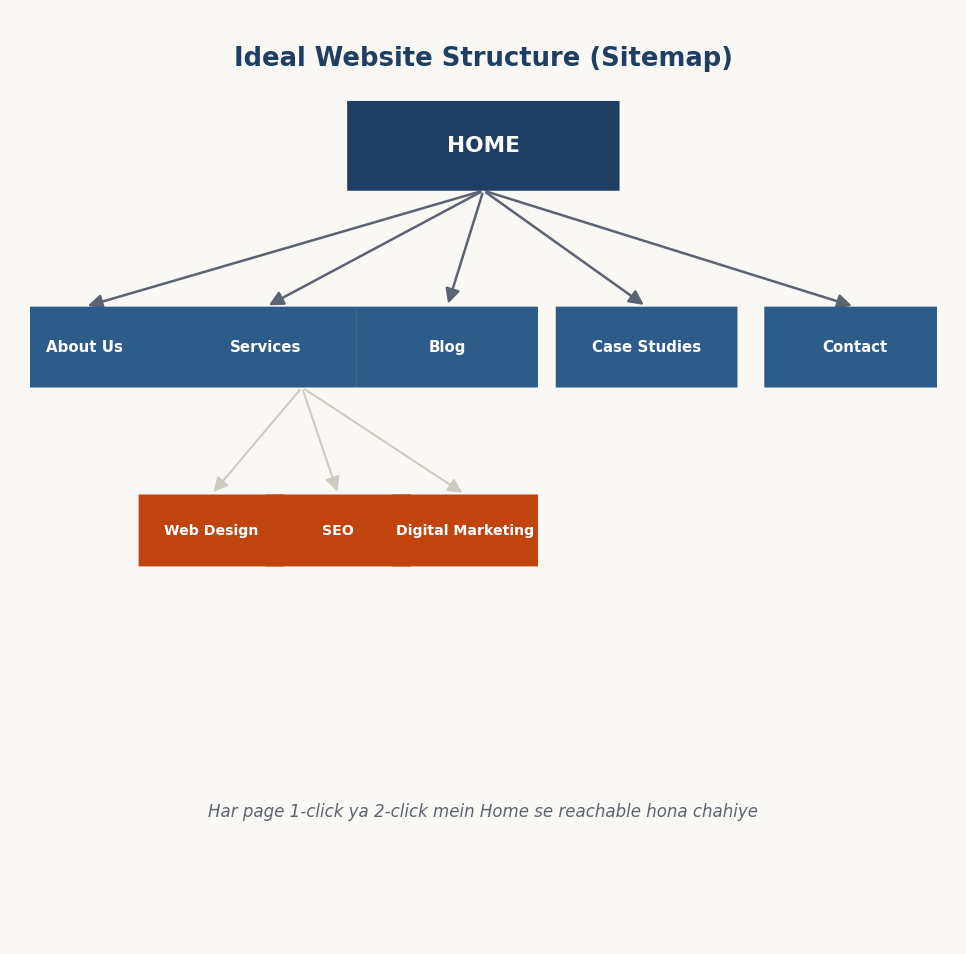
Website Structure ye batata hai ki aapki website ke pages kaise organize aur connect hain — jaise Home, About, Services, Blog, Contact. Achhi structure se user aur search engines dono easily navigate kar paate hain.
2. Real-World Use
- Claratrade India ki website structure aisi hai ki koi bhi visitor Home se 1-2 click mein Services, Case Studies ya Contact tak pahunch sakta hai.
3. Kaise Kaam Karta Hai
- Achhi structure "flat" hoti hai — matlab important pages Home se 1-2 clicks door hote hain, bahut zyada deep nahi.
- Clear navigation menu (header mein) user ko turant bata deta hai website mein kya-kya hai.
- Logical grouping (jaise Services ke andar sub-services) content ko organized rakhta hai.
4. Kaise Implement Karein (Step-by-Step)
- 1List banayein ki aapki website mein kaunse core pages honge (Home, About, Services, Blog, Contact).
- 2Decide karein kaunse pages main navigation menu mein honge, aur kaunse sub-pages hongi.
- 3Ek simple sitemap draw karein pehle, phir usi ke hisaab se website banayein.
- 4Har page se related dusre pages ko internal links se connect karein.
5. WordPress / HTML Site Example
WordPress: "Pages" aur "Menus" section se structure easily manage hota hai. HTML Site: Har page ek alag file hoti hai, aur navigation menu ko manually har page mein consistent rakhna padta hai.
6. Common Mistakes
- Bahut saare menu items daal dena, jisse navigation confusing ho jaata hai.
- Important pages (jaise Contact) ko deep bury kar dena, jahan user aasani se nahi pahunch pata.
7. Tools (Manual + AI)
- Manual: Figma/Miro (sitemap planning ke liye), XML Sitemap tools
- AI Tools: ChatGPT/Claude se business type ke hisaab se ideal website structure suggest karwana
8. Interview Questions
- Achhi website structure ke kya characteristics hote hain?
- Website structure SEO ko kaise affect karta hai?
9. Client Example (Alag-Alag Industries)
10. Practical Assignment
2.5 Landing Page Kya Hota Hai
1. Definition (Paribhasha)
Landing Page ek standalone, focused page hai jo ek hi specific goal ke liye banaya jaata hai — jaise ek specific offer/service ke liye lead capture karna. Ye homepage se alag hota hai kyunki isme distraction (menu, doosre links) kam hote hain.
2. Real-World Use
- Claratrade India jab "Free SEO Audit" ka Meta Ads campaign chalata hai, to us ad ka traffic homepage par nahi, balki ek dedicated landing page par jaata hai jo sirf isi offer ke baare mein hai.
3. Kaise Kaam Karta Hai
- Landing Page mein aksar navigation menu hata diya jaata hai, taaki visitor distract na ho aur sirf ek action (form fill karna) le.
- Ye ek specific ad campaign, offer, ya audience segment ke liye customize kiya jaata hai — homepage ki tarah generic nahi hota.
- Landing Page ka success directly conversion rate (kitne % visitors ne form fill kiya) se measure hota hai.
4. Kaise Implement Karein (Step-by-Step)
- 1Ek specific offer/goal decide karein jiske liye landing page banana hai.
- 2Navigation menu aur external links hata dein, taaki focus na bate.
- 3Sirf ek clear CTA rakhein (jaise "Free Audit Paayein").
- 4Ad ke messaging aur landing page ke messaging ko match karein (consistency zaroori hai).
5. WordPress / HTML Site Example
WordPress: Elementor jaisa page builder se easily "blank template" (bina header/footer) wala landing page bana sakte hain. HTML Site: Ek standalone HTML file bana sakte hain jisme site-wide navigation include na ho.
6. Common Mistakes
- Homepage ko hi landing page bana kar ads chalana — bahut saare distractions hone se conversion kam hoti hai.
- Ad ka message aur landing page ka message match na karna — visitor confuse ho jaata hai.
7. Tools (Manual + AI)
- Manual: Elementor, Unbounce, Instapage (dedicated landing page builders)
- AI Tools: ChatGPT/Claude se landing page copy likhwana
8. Interview Questions
- Landing Page aur Homepage mein kya farak hai?
- Landing Page mein navigation menu kyun hataya jaata hai?
9. Client Example (Alag-Alag Industries)
10. Practical Assignment
2.6 High-Converting Landing Page Structure
1. Definition (Paribhasha)
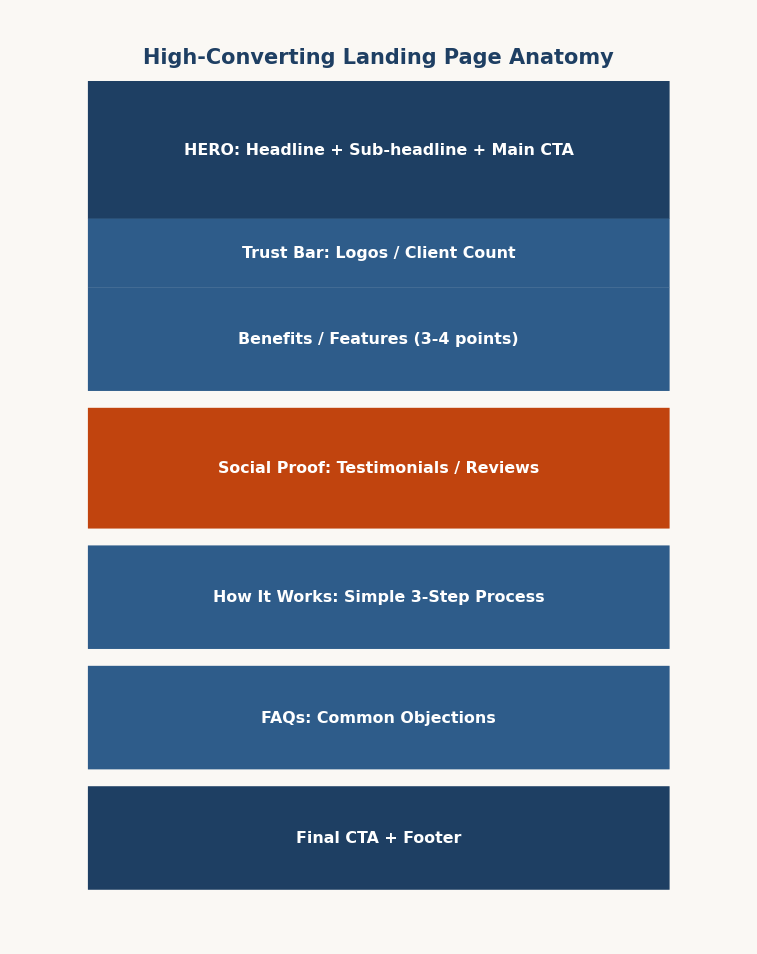
High-Converting Landing Page Structure ek proven layout pattern hai jo visitor ko step-by-step convince karte hue, action lene tak le jaata hai — Hero se lekar Final CTA tak.
2. Real-World Use
- Claratrade India apne landing pages mein pehle ek strong Hero headline, phir trust signals, phir benefits, phir testimonials, aur end mein CTA rakhta hai — is proven order mein.
3. Kaise Kaam Karta Hai
- Hero Section (headline + sub-headline + CTA) 3 second mein visitor ko batata hai "ye page kis baare mein hai" aur "mujhe kya karna hai".
- Trust Bar aur Social Proof visitor ke doubts kam karte hain ("ye brand reliable hai").
- Benefits/Features batate hain "mujhe isse kya milega", aur FAQs remaining objections clear karte hain.
- Final CTA visitor ko ek aakhri push deta hai action lene ke liye.
4. Kaise Implement Karein (Step-by-Step)
- 1Ek clear, benefit-focused Headline likhein (jaise "Apni Business ke liye Professional Website, 7 Din mein").
- 2Hero ke turant baad Trust signals (client logos, numbers) rakhein.
- 33-4 core Benefits ko simple icons ke saath list karein.
- 42-3 real Testimonials add karein.
- 55-6 common FAQs ka jawab dein, aur end mein ek strong Final CTA rakhein.
5. WordPress / HTML Site Example
WordPress/HTML Site dono ke liye same: Ye section-by-section structure kisi bhi platform par implement ho sakta hai — important cheez structure hai, tool nahi.
6. Common Mistakes
- Bahut lamba, text-heavy page banana jisse visitor scroll karte-karte thak jaata hai.
- Social Proof/Testimonials skip kar dena — trust build karne ka sabse strong tool miss karna.
7. Tools (Manual + AI)
- Manual: Elementor, Unbounce (structure implement karne ke liye)
- AI Tools: ChatGPT/Claude se headline variations aur FAQ content likhwana
8. Interview Questions
- Landing page mein Hero Section ke baad kya order hona chahiye aur kyun?
- Social Proof landing page mein kahan aur kyun rakha jaata hai?
9. Client Example (Alag-Alag Industries)
10. Practical Assignment
2.7 CTA, Forms & Lead Capture
1. Definition (Paribhasha)
CTA (Call-To-Action) wo button/text hai jo visitor ko specific action lene ke liye kehta hai (jaise "Contact Karein"). Lead Capture Form wo simple form hai jisse visitor ki details (naam, phone, email) collect ki jaati hain taaki follow-up ho sake.
2. Real-World Use
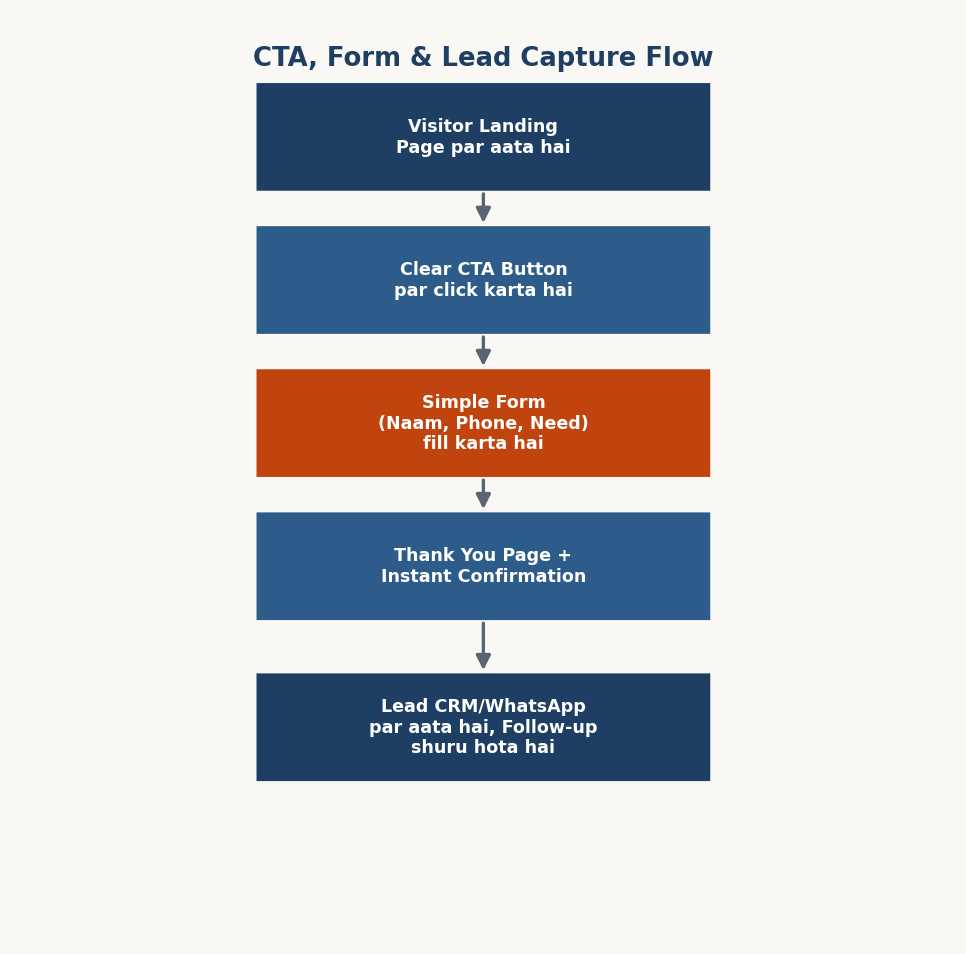
- Claratrade India ki website par "Free Consultation Book Karein" CTA button click karne par ek short form khulta hai — Naam, Phone Number, aur "Aapko kya chahiye" — jisse turant WhatsApp par lead notification aati hai.
3. Kaise Kaam Karta Hai
- Visitor Landing Page par aata hai, ek clear CTA button dekh kar click karta hai.
- Ek simple form (jitna chhota utna better) fill karta hai.
- Submit karne ke baad Thank You page dikhta hai jo confirm karta hai ki inquiry receive ho gayi.
- Lead data CRM ya WhatsApp par jaata hai, jahan se sales/follow-up team turant contact karti hai.
4. Kaise Implement Karein (Step-by-Step)
- 1CTA button ka text action-oriented aur specific rakhein (jaise "Free Quote Paayein", generic "Submit" nahi).
- 2Form mein sirf zaroori fields rakhein (Naam, Phone — bas) — jitna lamba form utni kam completion rate.
- 3Form ko Email/WhatsApp/CRM se connect karein taaki turant notification mile.
- 4Ek clear Thank You page/message set karein jo next steps bataye.
- 5New leads ko 5-10 minute ke andar follow-up karne ka process banayein.
5. WordPress / HTML Site Example
WordPress: WPForms/Contact Form 7 jaise plugins se easily form banake WhatsApp/Email se connect kiya ja sakta hai. HTML Site: Form ko backend script (PHP) ya third-party service (jaise Formspree) se connect karna padta hai.
6. Common Mistakes
- Form mein bahut zyada fields daal dena (jaise 10+ questions) — log form chhod dete hain.
- Leads ko turant follow-up na karna — jitni der follow-up mein lagegi, utna conversion chance kam hoga.
7. Tools (Manual + AI)
- Manual: WPForms, Contact Form 7, Google Forms
- Manual: WhatsApp Business API/Notifications, CRM tools
- AI Tools: ChatGPT/Claude se CTA copy variations likhwana
8. Interview Questions
- Form mein fields kam rakhna kyun important hai?
- Ek effective CTA button text kaise likhte hain?
9. Client Example (Alag-Alag Industries)
10. Practical Assignment
2.8 Mobile Optimization & Website Speed Basics
1. Definition (Paribhasha)
Mobile Optimization ka matlab hai website ko is tarah design karna ki wo mobile phones par bhi achhi tarah dikhe aur kaam kare. Website Speed ye batati hai ki page kitni jaldi load hoti hai — dono hi user experience aur SEO ke liye critical hain.
2. Real-World Use
- Claratrade India ke zyadatar clients ka traffic mobile se aata hai, isliye har website mobile-first approach se design ki jaati hai, desktop ke baad nahi.
3. Kaise Kaam Karta Hai
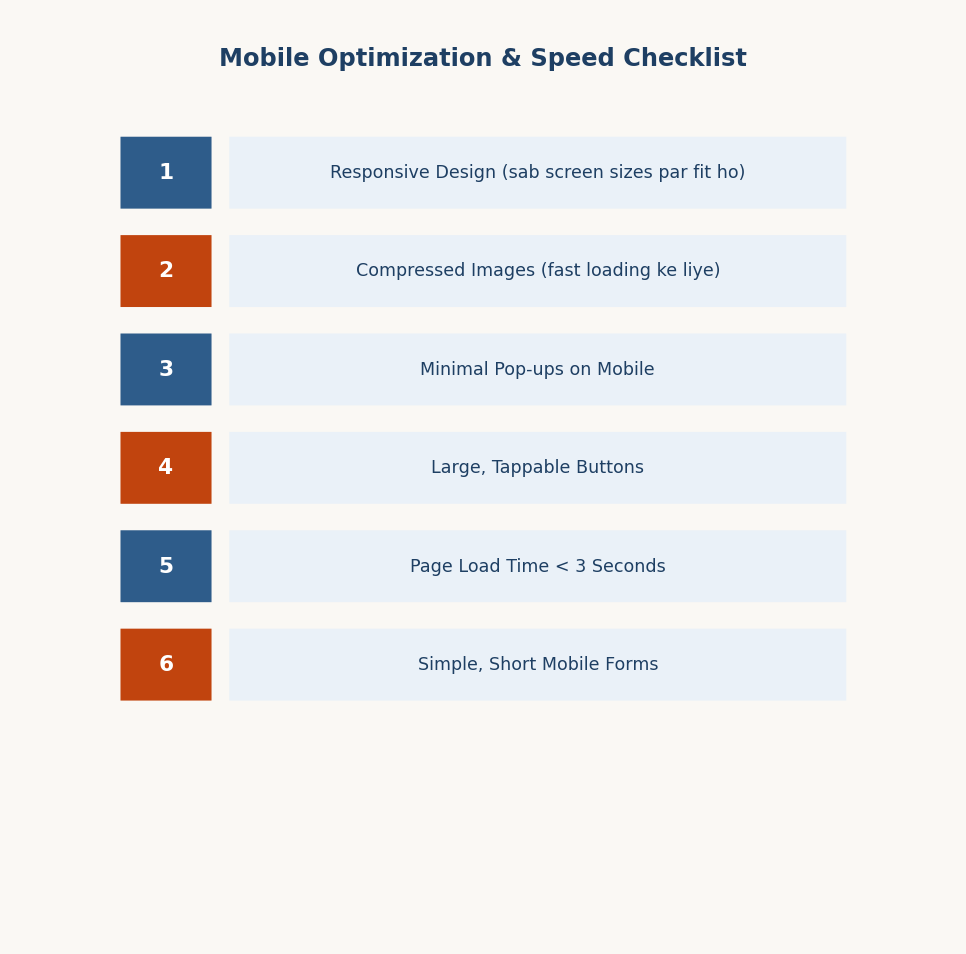
- Responsive Design automatically website ka layout screen size ke hisaab se adjust karta hai — mobile, tablet, desktop sab par sahi dikhta hai.
- Bade, uncompressed images website ko slow bana dete hain — compress karne se speed improve hoti hai bina quality zyada kharab kiye.
- 3 second se zyada load time lagne par bahut se visitors page chhod dete hain — isse leads/sales dono ka loss hota hai.
4. Kaise Implement Karein (Step-by-Step)
- 1Website design/theme choose karte waqt "responsive" hone ki confirmation karein.
- 2Har image upload karne se pehle usse compress karein (TinyPNG jaise tools se).
- 3Mobile par buttons aur text ko bada aur easily tap-able rakhein.
- 4Google PageSpeed Insights se website test karein aur suggestions follow karein.
- 5Mobile par pop-ups/interstitials minimal rakhein — Google inhe negatively treat karta hai.
5. WordPress / HTML Site Example
WordPress: Zyadatar modern themes already responsive hoti hain; caching plugins (WP Rocket) aur image optimization plugins speed improve karte hain. HTML Site: Developer ko manually CSS media queries se responsive design banana padta hai.
6. Common Mistakes
- Desktop par design test karke satisfy ho jaana, mobile par actually check na karna.
- Bahut heavy, uncompressed images aur videos directly upload kar dena.
7. Tools (Manual + AI)
- Manual: Google PageSpeed Insights, GTmetrix, TinyPNG
- Manual: Google Mobile-Friendly Test
- AI Tools: ChatGPT/Claude se PageSpeed report ke technical suggestions ko simple language mein samajhna
8. Interview Questions
- Website speed SEO aur conversions ko kaise affect karti hai?
- Responsive Design kya hota hai?
9. Client Example (Alag-Alag Industries)
10. Practical Assignment
2.9 Basic HTML/CSS Understanding
1. Definition (Paribhasha)
HTML (HyperText Markup Language) website ka structure/content banata hai (headings, paragraphs, images). CSS (Cascading Style Sheets) website ko design/style deta hai (colors, fonts, spacing). Digital marketer ko expert coder banne ki zaroorat nahi, lekin basics samajhna kaafi help karta hai.
2. Real-World Use
- Claratrade India ki team WordPress mein chhote-chhote custom changes (jaise button color, spacing) khud HTML/CSS ke basic knowledge se kar leti hai, bina har baar developer ko call kiye.
3. Kaise Kaam Karta Hai
- HTML "tags" (jaise <h1>, <p>, <img>) content ka structure define karte hain — kaunsa text heading hai, kaunsa paragraph hai.
- CSS "properties" (jaise color, font-size, margin) HTML elements ki appearance decide karte hain.
- Basic samajh se marketer GTM mein custom tracking snippets, ya WordPress mein chhote design tweaks khud kar sakta hai.
4. Kaise Implement Karein (Step-by-Step)
- 1Basic HTML tags seekhein — headings (h1-h6), paragraphs (p), links (a), images (img).
- 2Basic CSS properties seekhein — color, font-size, background, margin/padding.
- 3Browser ke "Inspect Element" tool se kisi bhi website ka HTML/CSS dekh kar practice karein.
- 4WordPress ke "Custom CSS" section mein chhote changes try karein.
5. WordPress / HTML Site Example
WordPress: "Additional CSS" option (Appearance > Customize) mein simple CSS daal kar design tweak kar sakte hain, bina poori theme edit kiye. HTML Site: Poori website hi HTML/CSS files se bani hoti hai, isliye ye knowledge yahan zyada directly zaroori hoti hai.
6. Common Mistakes
- Coding se itna dar jaana ki basic customizations ke liye bhi hamesha developer par depend rehna.
- Bina samjhe random code copy-paste kar dena, jisse website break ho sakti hai.
7. Tools (Manual + AI)
- Manual: Browser Inspect Element (right-click > Inspect)
- Manual: W3Schools (free HTML/CSS learning resource)
- AI Tools: ChatGPT/Claude se HTML/CSS code snippets generate ya debug karwana
8. Interview Questions
- HTML aur CSS mein kya farak hai?
- Ek digital marketer ko basic HTML/CSS kyun aana chahiye?